
South Africa is once again considering one of wildlife management’s most controversial practices: elephant culling. Provincial authorities in the North West and KwaZulu-Natal have increasingly framed elephant numbers as an ecological crisis, with proposals emerging to kill hundreds of elephants in Madikwe Game Reserve and several reserves in KwaZulu-Natal. Yet before South Africa returns to lethal management, two uncomfortable questions deserve far greater and urgent attention: has the scientific case for culling actually been made, and have all options been exhausted?
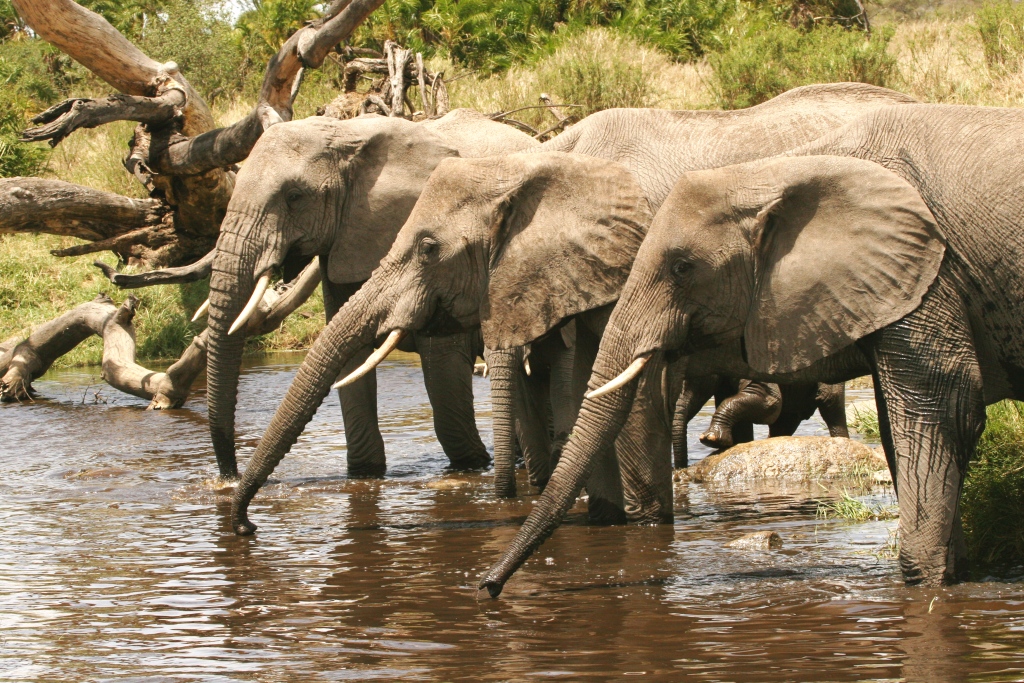
Elephant bulls gather at a waterhole in South Africa, where claims regarding elephant populations have fuelled debate over whether culling should be used as a management tool. (Photo credit: Francis Garrard)
Where does culling stand in evidence-based elephant management?
South Africa’s elephant management framework has long recognised that culling is a last resort measure, after a suite of non-lethal interventions has been implemented, monitored and found to be insufficient. That principle reflects not only ethical considerations surrounding highly intelligent and socially complex animals, but also decades of advances in conservation science that favour evidence-based management over reactive, lethal interventions. If culling is to be justified, it must firmly rest on transparent scientific evidence and demonstrable due process, not assertions that elephant numbers have become too high.
The country’s own policy framework reinforces this approach. South Africa’s recently adopted National Elephant Heritage Strategy repeatedly emphasises evidence-based decision-making, adaptive management, transparent governance and meaningful stakeholder participation as cornerstones of elephant management. Likewise, the Elephant Norms and Standards establish a clear hierarchy of interventions for managing elephant populations. Reserve managers are expected to first consider options such as range expansion, habitat management, translocation, and immunocontraception before culling is contemplated. Lethal management is intended to be the final option, not the first serious response when management challenges arise.
This is where current proposals by Ezemvelo KZN Wildlife and North West Parks and Tourism Board begin to unravel.
Despite growing calls for culling in the North West’s Madikwe Game Reserve and several reserves in KwaZulu-Natal, authorities have yet to publicly demonstrate the robust scientific evidence needed to support such an irreversible intervention. Even more concerning is the apparent failure to fully implement or adequately evaluate non-lethal alternatives before escalating discussions towards killing elephants. The burden of proof lies with those proposing lethal management. They should be able to demonstrate not only that elephant numbers pose an ecological threat, but also that all reasonable alternatives have been exhausted. To date, that burden has not been convincingly met.
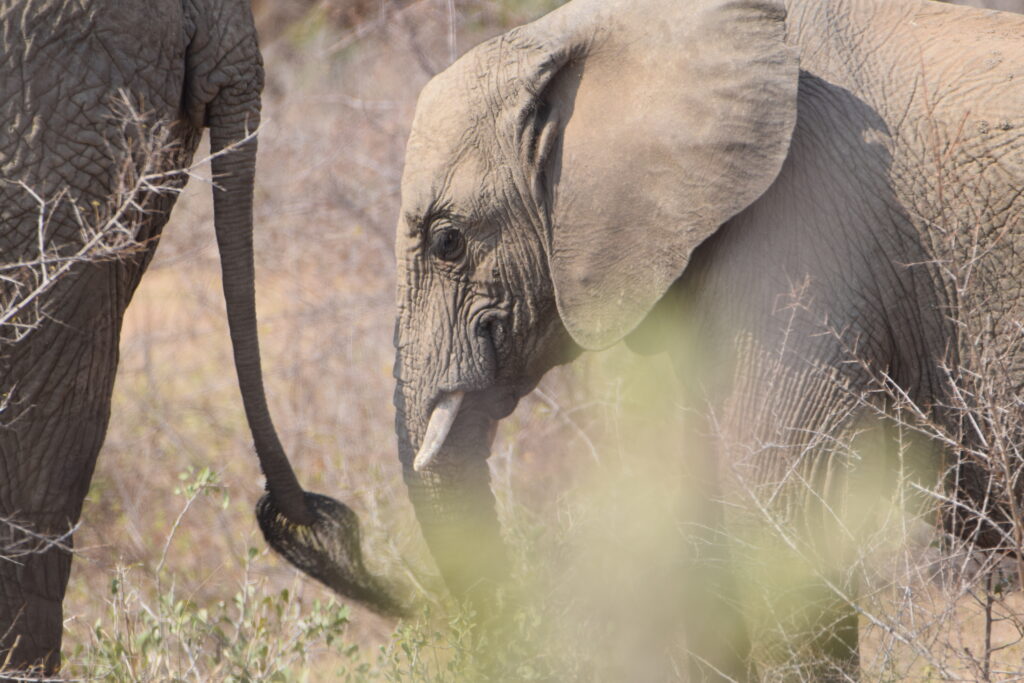
The debate over elephant culling raises complex questions about animal welfare, population management and conservation. (Photo credit: Stephanie Klarmann)
Madikwe and KwaZulu-Natal: an elephant crisis or administrative inertia?
The current narrative of an elephant “crisis” becomes far more complicated when viewed alongside the timeline of Madikwe’s proposed contraception programme. In December 2020, Humane World for Animals South Africa (formerly Humane Society International) submitted a formal letter offering support to implement an immunocontraception programme within the reserve. A draft Memorandum of Understanding followed in January 2021. However, the Elephant Management Plan was only submitted to the provincial MEC in August 2022, signed off the following month, and ultimately approved by former Minister Barbara Creecy in March 2023. Despite this approval, the Memorandum of Understanding enabling implementation was only signed in July 2024.
Those delays are not merely administrative details.
Sixteen months elapsed between ministerial approval and the signing of the MOU. Nearly four years passed between the initial offer of assistance and formal implementation. During that time, one of the country’s best-established non-lethal elephant management tools remained on hold.
The significance of this delay was highlighted during a recent Portfolio Committee meeting, where it was revealed that had the MOU been signed immediately following the approval of the Elephant Management Plan in 2023, immunocontraception could already have been in place for about three years. More importantly, reproductive control of the breeding population could potentially have been achieved during 2026, effectively stabilising population growth before lethal intervention ever entered the discussion.
That raises an unavoidable question: can culling genuinely be described as a “last resort” when one of the principal alternatives was delayed for years through administrative inertia?
According to figures presented by the North West Parks and Tourism Board, Madikwe’s elephant population increased from approximately 1,455 individuals in 2022 to 1,629 in 2023, before reaching 1,633 elephants in 2024 after 75 drought-related deaths. At the same time, reserve managers have cited an annual population growth rate of around 7.8%. Yet applying that growth rate would suggest that the population should now be approaching approximately 2,000 elephants. Instead, observed growth appears to have slowed considerably.
One possible explanation is that the population may already be approaching the early stages of density dependence, a well-recognised ecological process whereby population growth naturally slows as environmental resources become increasingly limiting. In large, long-lived mammals such as elephants, density dependence rarely manifests through sudden population crashes. Instead, scientists generally expect to see declining calf survival, longer intervals between births, and increased mortality during periods of environmental stress such as drought.
Madikwe may already be showing elements of this pattern. Reduced calf survival has reportedly been observed. Drought-related mortality has increased. Population growth appears to be slowing relative to earlier projections. Taken together, these indicators are consistent with the possibility that the population is beginning to regulate itself naturally.
Ezemvelo KZN Wildlife has increasingly adopted similar rhetoric around elephant overpopulation while proposing lethal management across several reserves. Yet many of the same questions remain unanswered. What demographic evidence demonstrates that culling is now necessary? Have all feasible non-lethal alternatives been fully implemented? Has the scientific evidence been independently scrutinised? And have stakeholders been meaningfully engaged before irreversible decisions are made?
These are not merely provincial disputes over elephant numbers. Together, Madikwe and KwaZulu-Natal are becoming a national test of South Africa’s commitment to evidence-based conservation.
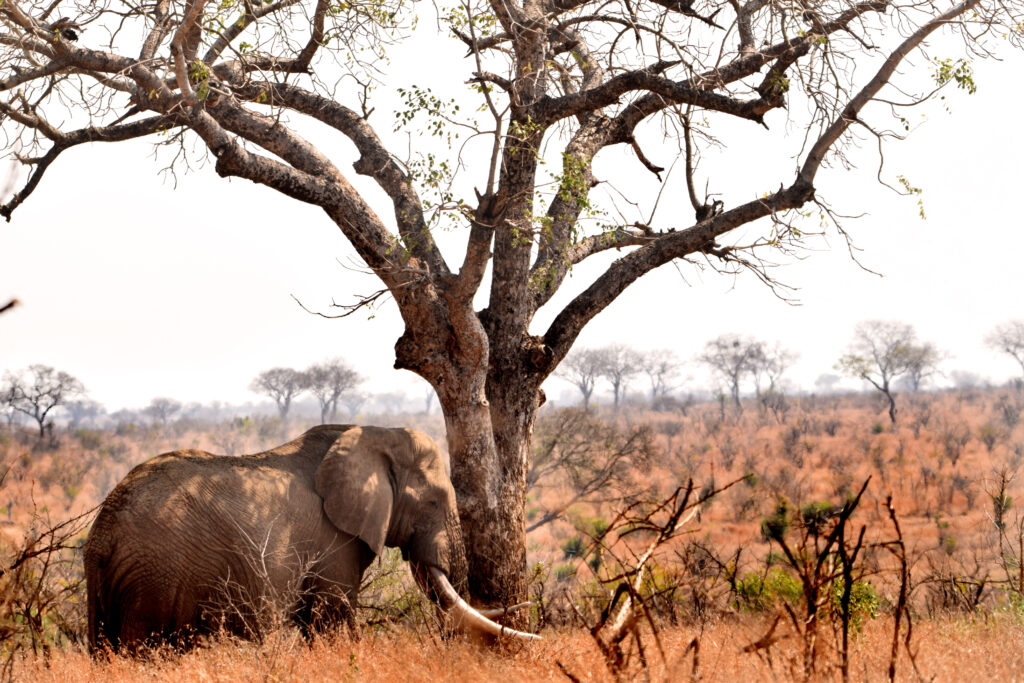
Elephants are recognised as highly intelligent and socially complex animals. Culling ought only to be considered after a suite of non-lethal interventions have been implemented, monitored and found to be insufficient. (Photo credit: Stephanie Klarmann)
An issue of failed governance, not elephant numbers
The central issue is not elephant numbers at all but one of governance.
If reserve managers have long been concerned about increasing elephant populations, why was contraception delayed despite years of expert engagement and available support? Why were opportunities for proactive management missed? Why are demographic uncertainties now being interpreted in favour of irreversible lethal intervention rather than continued monitoring and adaptive management?
These questions matter because good conservation is not simply about responding to ecological change; it is about anticipating it. Effective wildlife management ought to implement interventions early, monitor outcomes, and adjust accordingly. It does not mean allowing manageable problems to escalate before reaching for the most controversial tool available.
None of this is to suggest that elephant populations should never be managed. Small, fenced reserves create genuine ecological challenges that require active intervention, and there may well be circumstances where culling becomes unavoidable. But that threshold should be exceptionally high. Before lethal management is authorised, authorities should be able to demonstrate comprehensive demographic analyses, transparent ecological assessments, meaningful public participation, independent scientific review and clear evidence that non-lethal interventions have been fully implemented and rigorously evaluated.
At present, that standard has not been met.
The evidence currently available does not clearly establish an ecological emergency. It does, however, reveal years of delayed implementation of non-lethal management, unresolved scientific uncertainty, and troubling questions about whether South Africa’s own policy framework has been followed as intended.
An industry created by culling elephants
Ezemvelo KZN Wildlife’s scientific manager, Ian Rushworth, tellingly suggested that elephant culling has reached a point of inevitability and could create ‘a whole industry’ through the use of skins, meat, and ivory carving. Essentially, he positioned non-lethal alternatives as less than ideal in light of a potential boom in the trade of elephant parts.
Rushmore continued to elaborate on culling in other southern African countries, particularly highlighting the necessity to ignore public sentiment and the potential impact on tourism should culling go ahead.
In South Africa, tourism contributes almost 9% to our GDP, sustaining 1.8 million direct and indirect jobs. The tourism sector contributes more to the country’s GDP than transport, mining and agriculture. This is vital because we cannot ignore the potential backlash on South African tourism if thousands of elephants are to be culled in provinces that cannot afford to lose tourism markets.
Non-lethal elephant management is strongly favoured across South African citizens and international audiences from the UK, USA, Germany and the Netherlands, according to new public opinion data. Of the South African respondents, 81% agreed that the country’s reputation as a conservation leader would be damaged should culling be reinstated as a primary method of elephant management, where non-lethal options for range expansion, wildlife corridors, water-source management and contraception could be explored first, all of which are aligned with the National Elephant Heritage Strategy.
Given South Africa’s heavy reliance on tourism, it’s ill-advised to ignore public sentiment when 47% of the respondents reported being less likely to visit the country if South Africa resorted to culling.
Transparency and independent scientific review are both sorely lacking. Before these reserves kill hundreds, or potentially thousands, of elephants, they should first answer a much simpler question: can they demonstrate that they genuinely did everything that their own policies require before reaching for the rifle?
If the answer is no, then the real crisis confronting South African conservation is not one of elephant overpopulation. It is one of governance.
*The original article was published in Afrikaans in Rapport newspaper, 16 August. The online version is available on Netwerk24 here: https://www.netwerk24.com/stemme/aktueel/die-uitdun-debat-moenie-olifante-laat-boet-as-mense-droogmaak-20260815-0682